
Up to 20% reduction in operational costs with intelligent routing
Route planning in minutes, not days
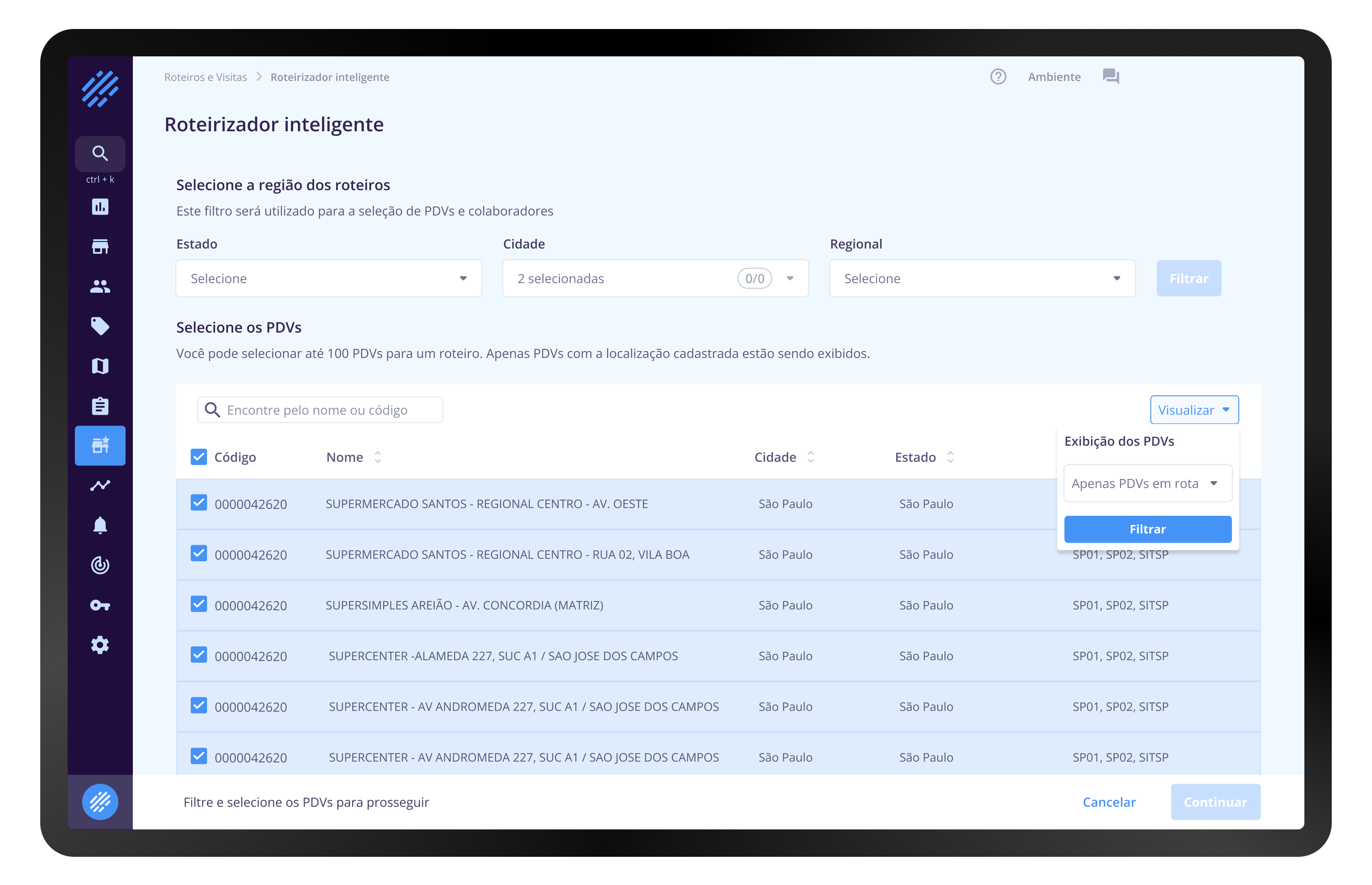
Context
Companies with field teams need to plan hundreds of visits to Points of Sale (POS) weekly. This process typically involves multiple back-office staff in industries or Trade Marketing agencies.
Problem
Manual routing leads to unnecessary travel, reduces the number of daily visits, and increases transportation costs. Managers can't quickly identify failures, perpetuating operational inefficiency.
From manual planning to intelligent optimization: more visits, less travel, and reduced costs
reduction in field team travel distance
to plan routes that used to take weeks
"The tool brought us predictability and organization. Through it, we provide the sales team with greater accuracy in planning and customer visit coverage." (translated)
"Without the Intelligent Route Planner structure, it would take us the entire month to cover all POS—literally from the first to the last day." (translated)
enterprise clients acquired during MVP phase
retention rate after implementation
Immediate impact
- Independence from external tools and manual spreadsheets
- Operational decisions based on AI-optimized data
- Replicable implementation process for new clients
Mapped risks
- Difficulty using without structured onboarding
- AI limitations in complex scenarios or custom business rules
- Need for reliable data to ensure optimization accuracy
Speed vs. Experience: value-driven prioritization
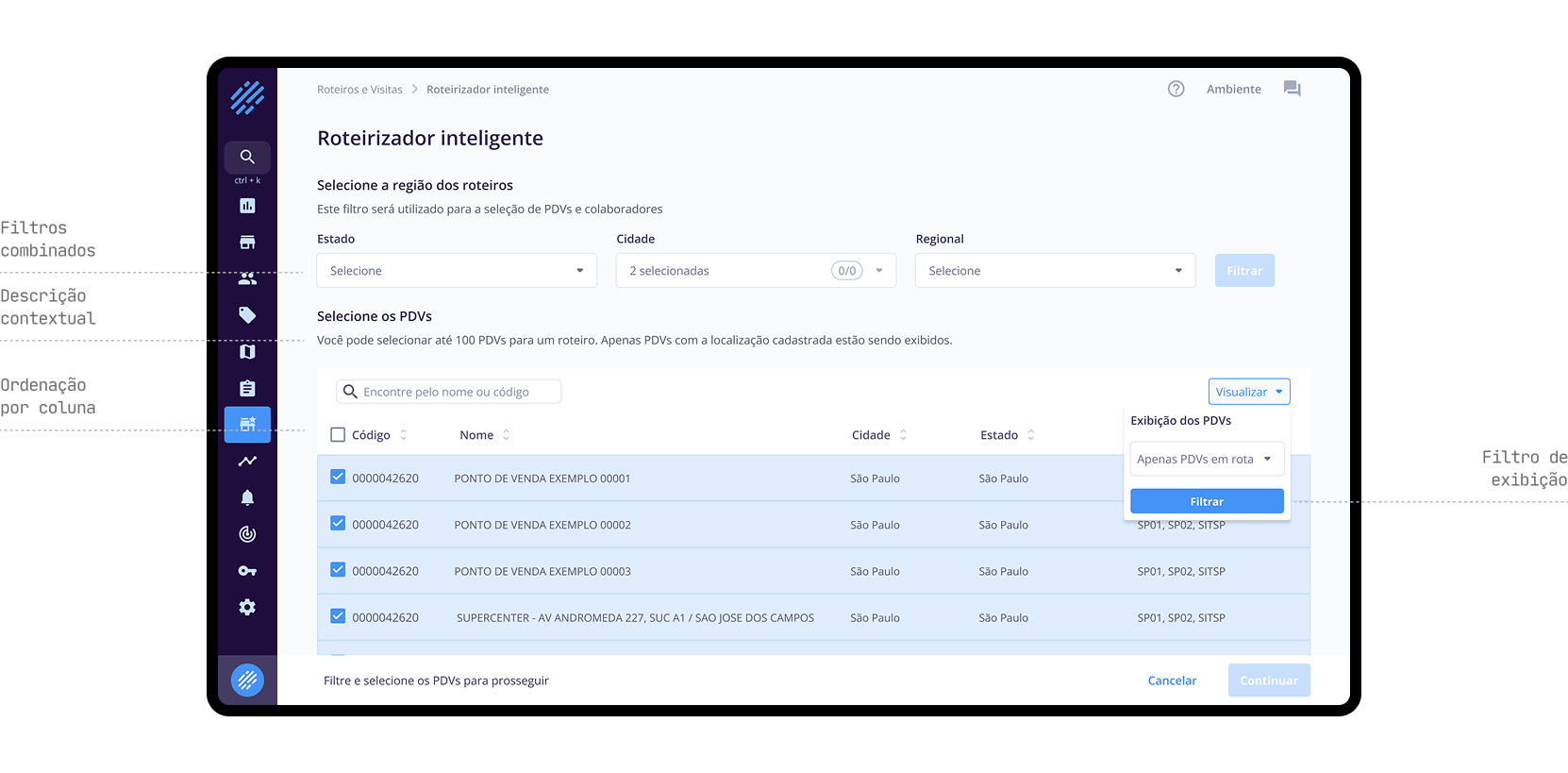
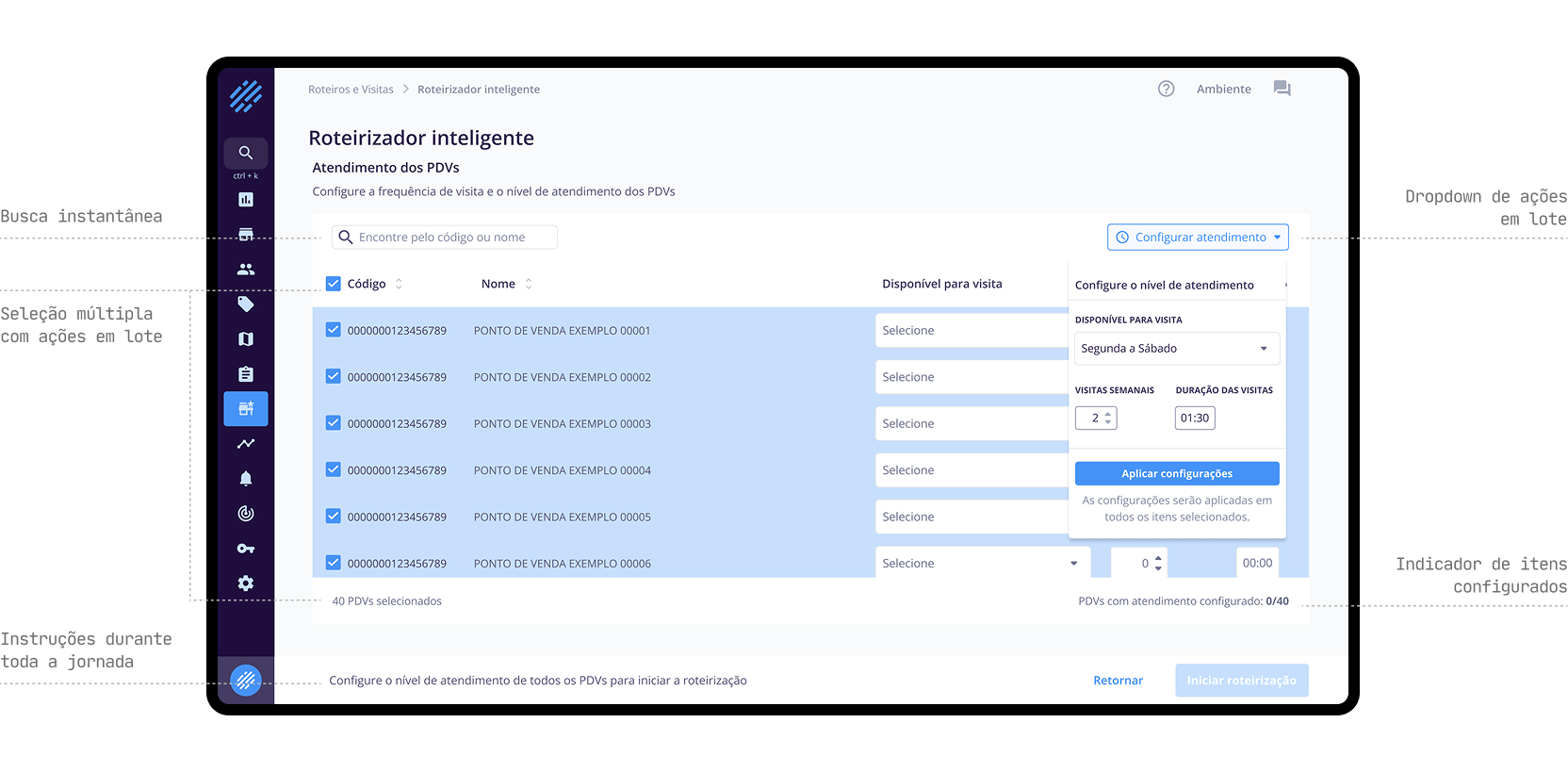
As a Product Designer, I worked on defining a strategy focused on quickly validating the competitive differentiator. Instead of refining the entire user journey, we prioritized AI-powered route automation, ensuring immediate functional value and allowing experience evolution to be guided by real usage data.
Observed impact
- 100% retention, indicating delivered value compensated for initial friction
- Results-first priority, with clients valuing delivery speed over immediate convenience
- Feedback-driven evolution, directing incremental onboarding improvements
- Technical AI validation, enabling new enterprise contracts
Materializing learnings quickly
Interviews and tests with operations managers guided every design decision. Continuous validation ensured a solution that solves real problems.
Project learnings and next steps
Validation focused on the biggest risk (De-risking)
Before investing in design refinement, we prioritized validating whether AI actually delivered value. This was important because it allowed guiding various decisions based on real early adopter usage.
Time-to-Value priority in B2B
In the enterprise context, significantly reducing execution time had more impact than offering a polished experience from the start. The learning curve was accepted because the efficiency gain was clear.
Building trust between design, business, and engineering
Building a new product requires transparency and constant communication. Managing expectations in this project was challenging, but it allowed developing skills to anticipate problems, align technical scope, and keep the design team informed about decisions made.
Design as a scope facilitator
Working alongside PM and TL, I contributed to defining a leaner scope aligned with the development team. This ensured the value proposition was evident at launch.